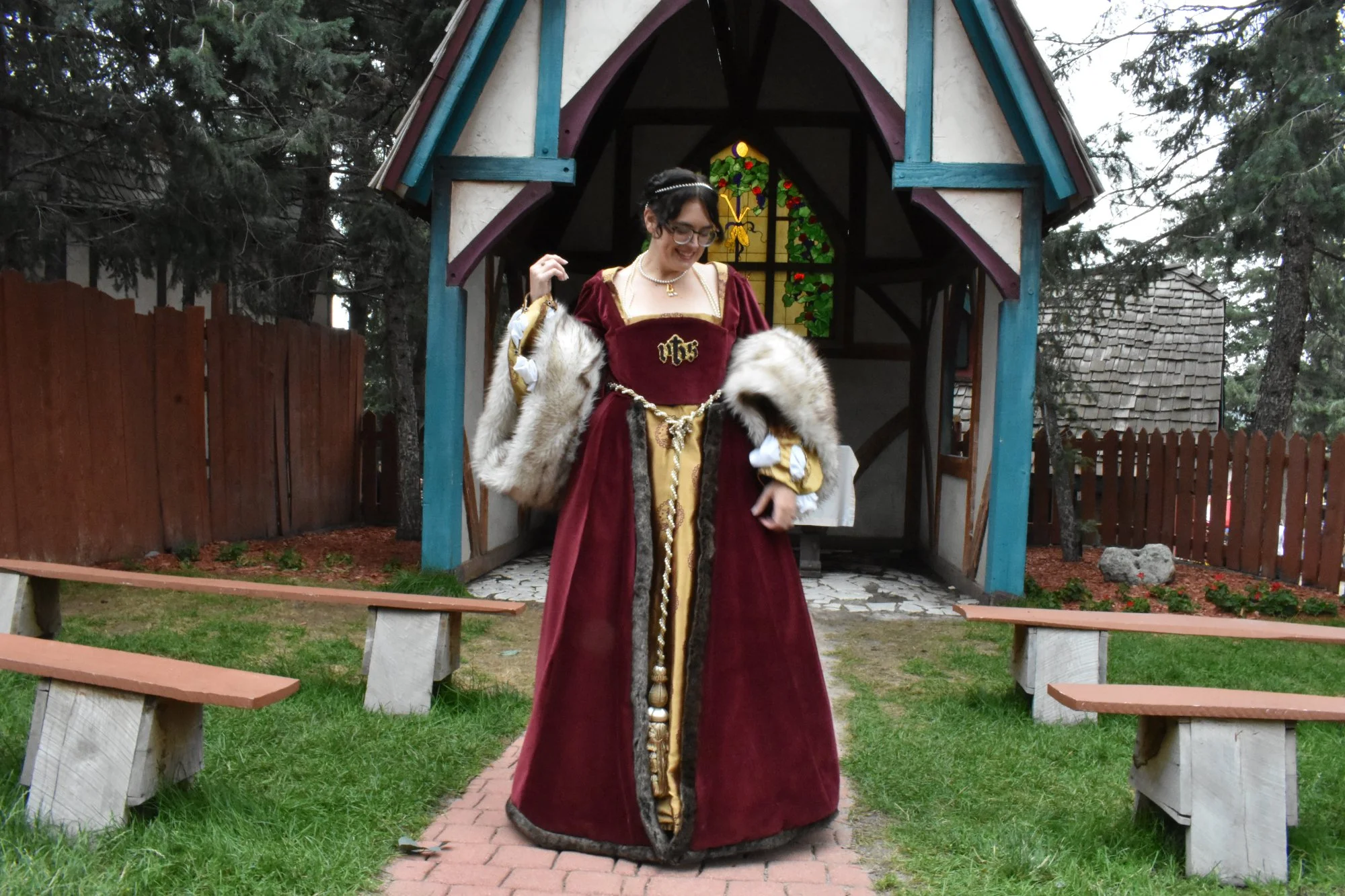
16th Century Tudor Inspired Dress
Based on portraiture of Queen consort of England, Jane Seymore by Hans Holbein and others extant garments
08/2023 - completed
Historical Costume Reproduction
I have always loved clothes, not because I wanted to keep up with the latest fashion, but because from an early age I understood clothes as a means of self expression. As a kid, I wore a pink satin shirt with bell sleeves in my first passport picture and proudly proclaimed my desire to be a flight attendant on the grounds of their immaculately tailored suits. My grandma and I would sit down at her 1920s Singer to sew a holiday dress, and she would always advise that good sewists never leave strings. I still hear her in the back of my head as I sew historical projects today and think about our afternoons in her craft room. Sewing was always a safe space, and clothing was one of the places I felt I could tell people how I was feeling without saying a word.
I have completed a recreation of a sixteenth-century gown as something of a practice in immersive research. Having hand sewed much of the gown, I had time to think about why I was spending my time stitching together pleats. Reproducing the gown brought home the immense labor involved in early modern clothing production. More importantly, however, as I engaged in the same activity that other women had performed hundreds of years earlier, I could imagine the owner’s eager anticipation of the moment when she would wear the gown for the first time. This would be an opportunity to display not just needlework skills but creativity, taste, and perhaps even political leanings. She would have known that this was not “merely” fashion. I want to help others feel this same connection to the past, even if they never pick up a needle and thread.


Hans Holbein the Younger - Jane Seymour, Queen of England, c. 1536. Picture courtesy of the Google Art Project.
Jane & The Original Dress
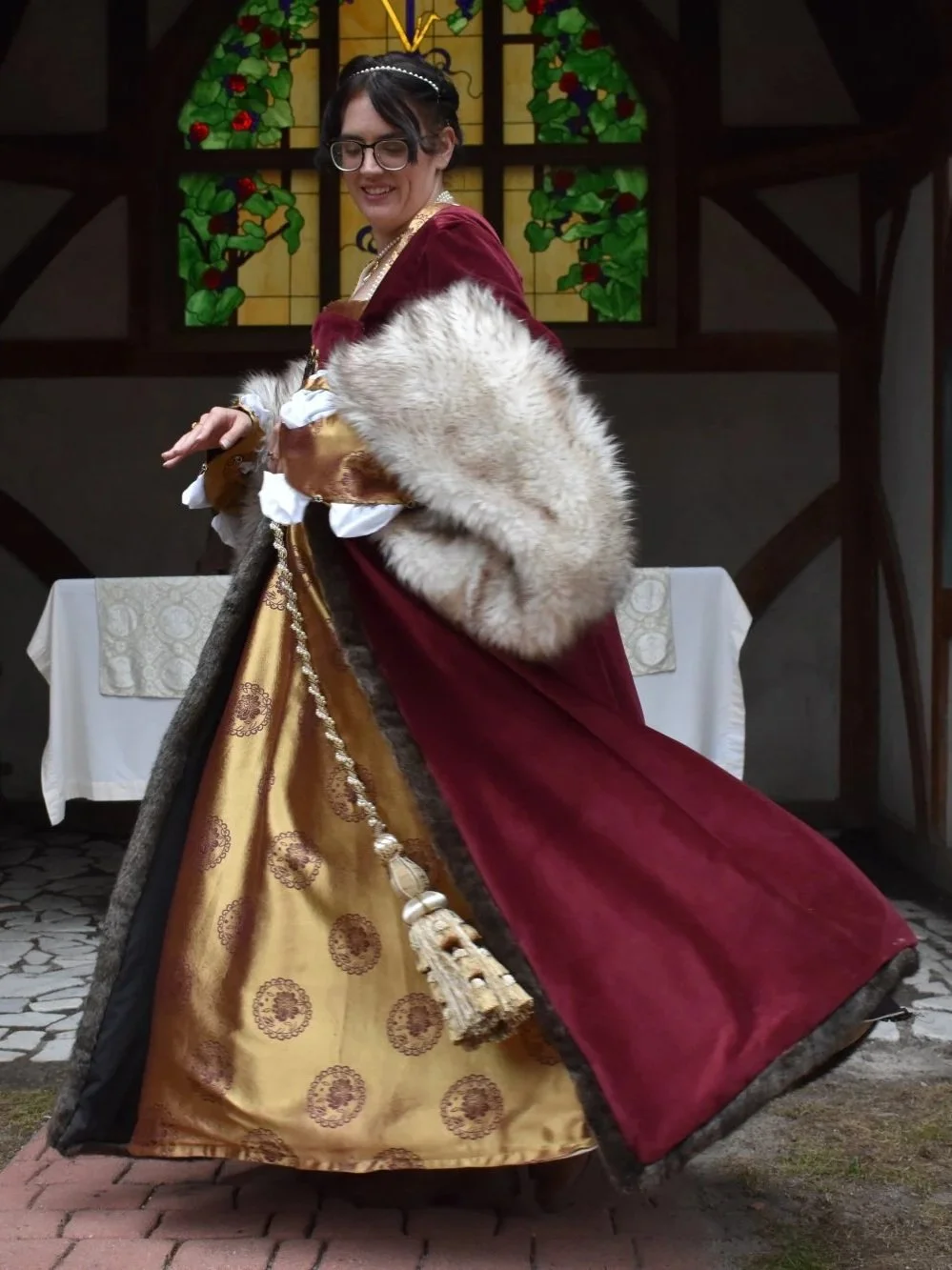
This gown was inspired by Queen consort of England, Jane Seymour (c.1509-1537). Her portrait, done by Hans Holbein, features a rich red gown, decorative gray sleeves, and ornamental jewelry. While there are many components of my dress that reflect what the historic construction would be like, there were certain liberties that I had to make to make this project viable in 2023. First and foremost, I did not bone the Kirtle with whale bone and due to cost restrictions. Liberties were taken with textile selection based on modern fabric availability.
The layers of dress are as follows:
Chemise (this garment protects the costly outer layers from sweat so they do not need to be washed as frequently)
Hoop Skirt (this garment creates a full skirt and pushes the heavy outer garments away from the legs)
Bum Roll (the main undergarment that provides structure to the backside)
Kirtle (the main undergarment that provides structure to the upper body)
Over Dress (laced in the front to secure)
Placket (this covers the unsightly lacing at the front of the over dress)
Decorative Sleeves (added at the very end to add extra visual interest beneath the fur)
Tassel Belt
Given the picture to the right, it is clear that I took liberties with the dress that I made. Primarily, I don’t really like wearing gray clothes, and I think it is important to realize that clothing is a form of expression, as such, I found gold fabric that I really loved and made the decision to move forward with different colors since it would be almost impossible to imitate the fabrics in the photo exactly. In addition, I do not have access to a 3D printer, or the desire to become a metal worker. Consequently, I beaded the middle part of her emblem worn on her chest. Liberties aside, this gown reflects the silhouette of the time, as best as I could imitate, and that was one of the goals I set out with. One day I hope to revisit this dress and sew on the gold and black ouches and pearls along the neckline.